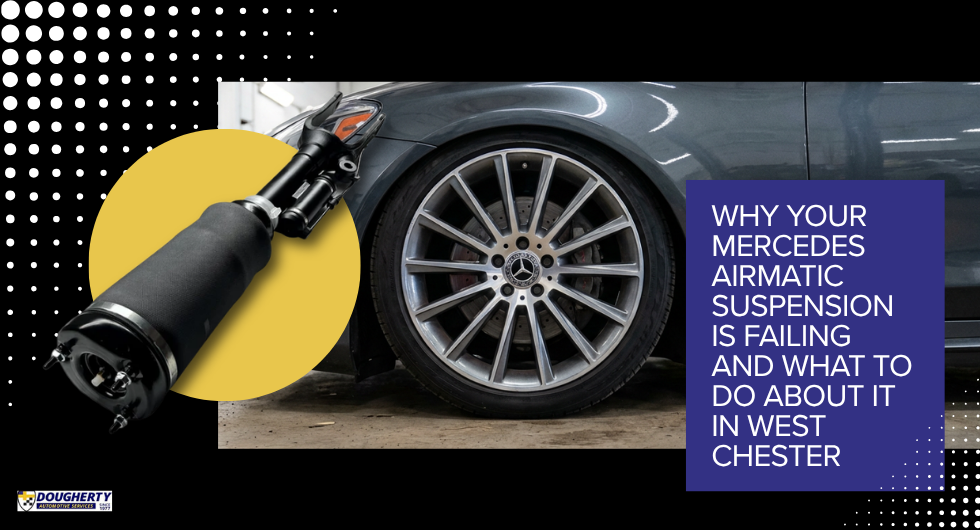
The AIRMATIC system is one of Mercedes-Benz's most sophisticated engineering achievements — a fully adaptive…

That Pause Before Drive Bites on a Cold Morning Is Your Mercedes Transmission Talking
You back out of the driveway on Paoli Pike, pull the selector to drive, and for a beat nothing happens. Then it engages with a small thump. By the time you reach Route 202 it behaves perfectly. So you forget about it. Nothing on the dash, nothing obvious on a scan tool. That delay is one of the earliest things a Mercedes automatic does when hydraulic pressure is no longer building the way it should.
Late fall is when it shows itself. Cold fluid is thick fluid, and a transmission that is already slow to build pressure gets noticeably worse through a Chester County winter of cold starts and short trips.
Quick Summary: Key Takeaways
- Delay is a symptom, not a quirk: A pause before drive or reverse engages means pressure is arriving late. Cars do not develop that from new.
- Cold makes it obvious: Thick fluid at 30 degrees exaggerates a weak pump or a worn valve body, which is why owners notice it first in October.
- Adaptation values tell the story: A scan that reads shift pressures and adaptation, not just fault codes, is what separates a guess from a diagnosis.
- Cheap causes exist: A tired mount, a low level or a failing selector switch can imitate this. That is exactly why the car gets tested before parts get ordered.
- Family-run since 1977: Bosch Authorized Service Center in West Chester, with a free loaner car on scheduled repairs.
A Mercedes automatic shifts on pressure, and pressure needs time to build
Everything inside a Mercedes automatic happens hydraulically, which is the part most owners never picture. A pump driven off the engine pressurizes the fluid, a valve body routes it, and clutch packs squeeze together to lock a gear. Selecting drive means filling a clutch pack and holding it. Do that with fluid at full pressure and the engagement is instant and smooth. Do it with a worn pump, a leaking circuit or a valve body whose bores have wear in them, and the fill takes longer than the software expects — which you feel as a pause and then a thump.
Fluid ages too. Heat cooks the friction modifiers out of it, clutch material and varnish end up circulating through tight hydraulic passages, and pressure control gets steadily lazier.
Four symptoms, and what each one is actually telling you
Take them one at a time. A delay into drive or reverse means a clutch pack is filling slowly. A flare between gears, where revs rise before the next ratio bites, means overlapping clutches are not being handed over cleanly. A hard downshift as you come to a stop points at pressure control. Not wear. And a whine that rises with engine speed regardless of gear usually points at the pump.
Together they build a picture. Individually each has cheaper explanations. So the car gets measured instead of guessed at.

Cold mornings expose it first, which makes fall the time to look
Winter is hard on a tired automatic. Cold fluid is thick and slow, so a pump that is marginal at operating temperature struggles badly on the first mile, and every cold morning asks it to fill a clutch pack with fluid that does not want to move. Then the short trips arrive. A car that never gets its fluid up to temperature spends all winter in the exact condition that exposes the fault.
Cold costs you elsewhere too. The Department of Energy’s testing puts winter fuel economy losses at 15% to 33% on short trips, partly because oil and driveline fluids thicken — the same conditions that make a tired transmission feel worse every morning.
Driving through it is how a small fault becomes a large one
A clutch pack that fills slowly slips while it is filling, and slipping clutches shed friction material into fluid the whole hydraulic circuit then has to live with. What starts as a one-second delay on a cold morning becomes a delay at every temperature. We have seen cars driven a year past the first thump arrive needing far more than the first visit would have cost.
Plenty of owners find out at an inspection. The car goes up on the lift for its annual Pennsylvania safety and emissions check, someone drives it onto the rack, and the delay gets noticed by a technician who was not looking for it.
How the diagnosis gets done in our Hagerty Boulevard shop
Cold road test first, always. The delay has to be felt at the temperature you feel it at, so the car gets driven before it is warm and then again hot. Fluid level and condition get read, stored codes and adaptation values come off the scan tool, and the mounts get pried too, since a collapsed mount imitates a driveline problem convincingly.
Only then does anyone talk about repair. What the fix turns out to be depends entirely on what the testing shows, and you get told what was measured before a single part is ordered. Family-run here since 1977, Bosch Authorized, GIAC dealer, and a loaner car if the work is scheduled.

Frequently Asked Questions
Q: Why does my Mercedes hesitate before it goes into drive?
A: Because a clutch pack is taking longer to fill with pressurized fluid than the transmission software expects. Low or degraded fluid, a worn pump, an internal leak or a worn valve body will all do it, and a cold engine makes every one of them worse.
Q: Is a one-second delay into reverse serious?
A: Look at it now. A delay means something slipped while it filled. Slipping sheds debris, and debris makes the next delay longer still. Caught early the cause is often simple, and the diagnosis costs a fraction of what a neglected transmission does.
Q: Can a bad engine or transmission mount cause this?
A: A collapsed mount will not cause a hydraulic delay, but it makes the engagement land far harder than it should, and owners describe the two the same way. It takes two minutes on a lift. That is why it gets ruled out first.
Q: Does it need a full transmission repair?
A: Not necessarily. Nobody should tell you it does before the car has been tested. Plenty of delayed-engagement cars turn out to have something straightforward behind them. The point of a diagnosis is finding out which kind you have.
Get it looked at before winter makes it a daily problem
A one-second delay is a small symptom with an outsized ability to ruin a month. Bring your Mercedes to our Hagerty Boulevard shop and you will get a proper road test and a straight answer, plus a loaner if the work is scheduled.
Dougherty Automotive Services — 17 Hagerty Blvd, West Chester, PA 19382
Hours: Monday to Friday, 8:00 AM to 5:00 PM. Closed Saturday and Sunday.
Website: doughertyautomotive.com

Related Posts